Important limitations and correct use of AusWing
Auswing is designed to assist with the identification of Australian native bees using wing morphology. While the system is robust, users should be aware of inherent limitations related to taxonomy and database coverage.
Samples from non Australian bees or from other insect groups such as wasps or flies may produce false or misleading results. This does not indicate a fault or weakness in Auswing. It reflects the fact that the reference database is built from Australian native bee taxa only. Auswing is intended to narrow an identification to a probable taxonomic range, ideally to subgenus and at minimum to genus level.
In some cases, a submitted sample may return a result that is clearly incorrect. This can occur because wing morphology in other insects may closely resemble that of certain native bees. For example, some wasp wings share similar venation patterns with bees. In such cases, Auswing may return a match that is incorrect at multiple taxonomic levels, through no fault of the system.
For this reason, careful selection of sample images is essential. While Auswing is tolerant of moderate operator error in landmark placement, deliberately or inadvertently submitting wings from non native species or from different insect taxa will lead to unreliable results.
European Honey Bee
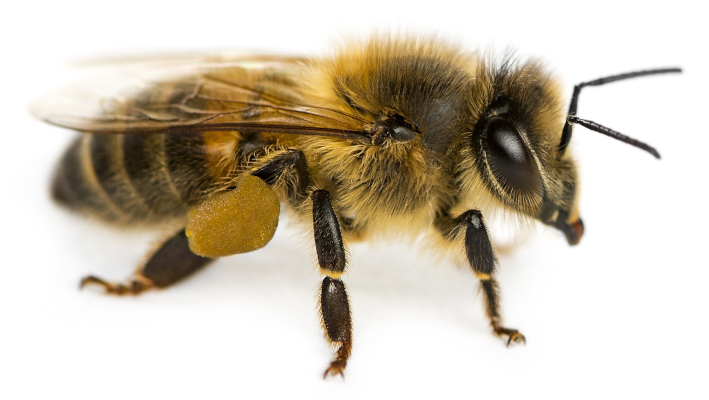
The European honey bee is not native to Australia. Auswing includes a detection system that flags samples consistent with Apis mellifera and notifies the user that the specimen is a non native species.
European Wasp
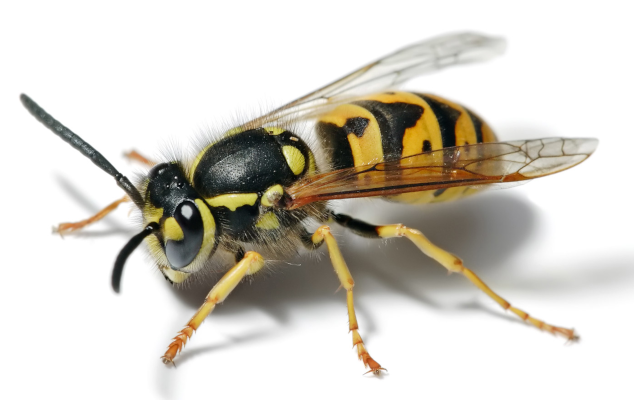
The European wasp is also non native. At present, Auswing does not automatically flag this species. Users should exercise caution when submitting samples, as wasp wings can resemble those of some native bees.
Cuckoo Wasp
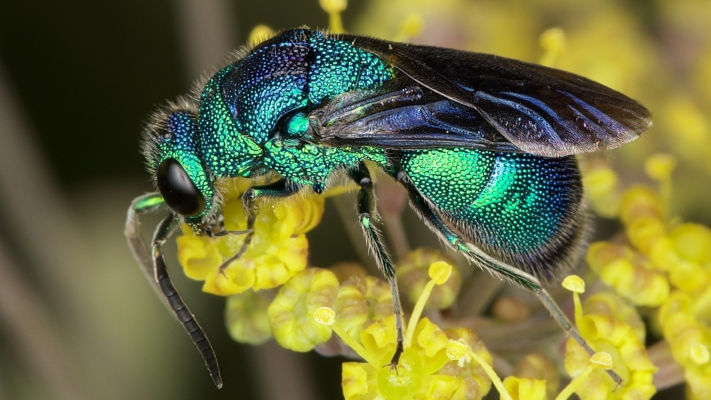
Cuckoo wasps are native wasps that are often small and brightly coloured. Due to their size, they are sometimes mistaken for native bees. Their wing morphology may partially overlap with bee wing patterns, so extra care is required when assessing specimens.
Flies
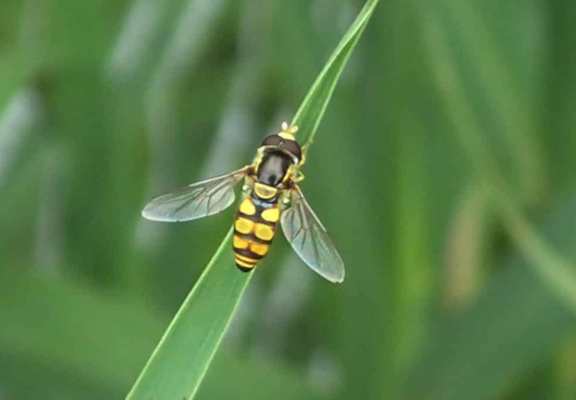
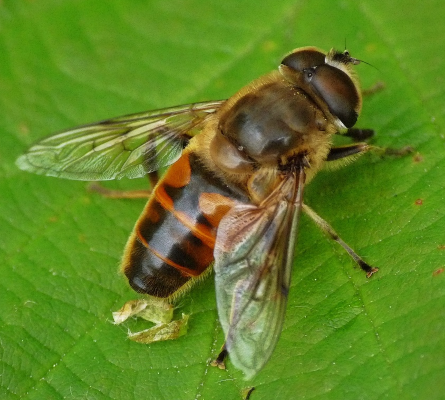
Some flies are frequently misidentified as native bees, particularly drone flies and hover flies. These belong to entirely different taxa. A simple diagnostic feature is wing number. Bees have two pairs of wings, whereas flies have only one pair. Submitting fly wings to Auswing will result in incorrect identifications.
Final Guidance for Users
Auswing should be used as a decision support tool rather than a definitive identification system. Always confirm that the specimen is an Australian native bee before submission, and where possible, use additional morphological or ecological information alongside Auswing results. Careful sample selection will greatly improve the accuracy and usefulness of the output.